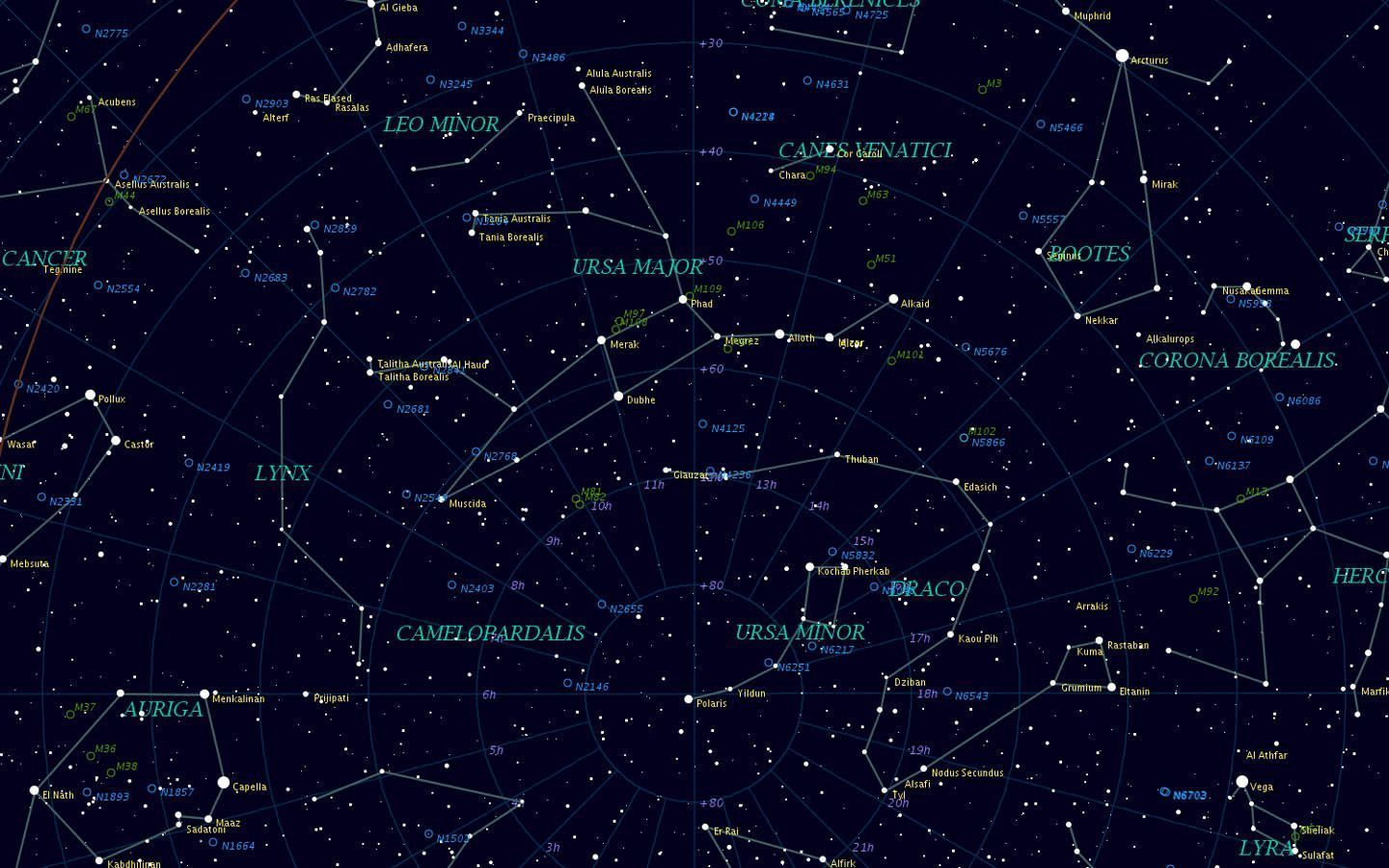
Stargazing is a timeless activity that has captivated humans for centuries. Looking up at the night sky and searching for constellations is a wonderful way to connect with the universe and our place within it. There are countless constellations visible to the naked eye, each with its own unique history and mythology.
In this blog article, I will share with you my three favorite constellations, along with some fun facts and tips on how to locate them. Whether you’re an expert astronomer or a beginner stargazer, these constellations are sure to awe and inspire you. So let’s take a journey through the cosmos and discover the beauty of these celestial wonders!
Orion
The Orion constellation is one of the most recognizable constellations in the night sky. It is named after Orion, a hunter in Greek mythology, and is visible in the northern hemisphere from December to April. Orion is easily identifiable by three bright stars in a row that form Orion’s belt, as well as two bright stars representing his shoulders and two more stars representing his feet.
Orion is home to many fascinating celestial objects, including the Orion Nebula, a massive star-forming region that is visible to the naked eye in clear skies. The constellation also contains Betelgeuse, a red supergiant star that has been observed to fluctuate in brightness, and Rigel, a blue supergiant that is one of the brightest stars in the night sky.
Orion has been an important constellation across many cultures throughout history, and has inspired countless works of art and literature. From ancient Greece to modern-day astronomy, the constellation continues to capture our imaginations and serve as a reminder of the vast wonders of the universe beyond our own planet.
Cygnus
The Cygnus constellation, often referred to as the Northern Cross, is a strikingly conspicuous and instantly recognizable star grouping that is situated in the Milky Way galaxy. The prominent constellation comprises some of the most luminous celestial bodies, including Deneb – one of the most radiant stars ever observed.
Deneb is estimated to have a size of over 100 times larger than our sun, making it a highly fascinating object of study.Not only is the Cygnus constellation captivating in terms of its astronomical attributes, but it also holds a great deal of mythological importance.
In ancient Greek mythology, the constellation was associated with Zeus, who is believed to have taken on the guise of a swan to seduce Leda, the queen of Sparta and wife of King Tyndareus. The constellation is also tied to the character of Hercules, who was granted eternal life and placed amongst the stars by Zeus.
Moreover, the Cygnus constellation boasts several deep sky objects, including the Pelican Nebula, North America Nebula, and Veil Nebula. These objects are a popular target for astronomers and astrophotographers alike, due to their brightness and accessibility. Overall, the Cygnus constellation is an awe-inspiring and captivating sight for anyone interested in science, mythology, or the marvels of the universe.
Pegasus
Observing the Pegasus constellation is a remarkable experience that has captivated many enthusiasts. This constellation’s features are reminiscent of the mythical winged horse Pegasus, paying tribute to ancient Greek mythology. It is visible all year round in the Northern Hemisphere, making it easily accessible for observation.
The Enif star, one of the constellation’s brightest stars, serves as a useful reference point in the sky. Another fascinating feature is the Pegasus Cluster, also known as Messier 15, which is a prehistoric collection of more than one hundred thousand stars.
To stargazers and astronomers, the Pegasus constellation is a must-see object in the Milky Way. Overall, the Pegasus constellation is a mesmerizing and awe-inspiring sight that continues to fascinate sky watchers.